Stone lion

Stone lion

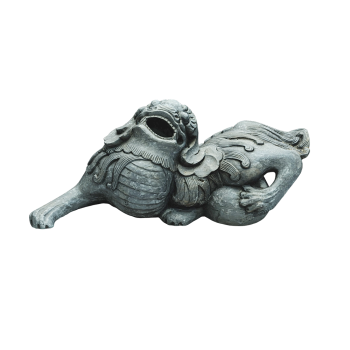
In East Asian cultures, the stone lion was an ancient symbol of conservation, longevity and prosperity. They are often placed in pairs in front of palaces, temples or government offices as symbols of power and status. The lion's paw was on a hydrangea. In traditional paired stone lions, the male usually steps on the hydrangeas (a symbol of power) and the female is a cub (a symbol of prosperity). Such stonework is usually made of granite or marble. Historically, heavy stonework has also been used as ballast stone for ships to increase stability.
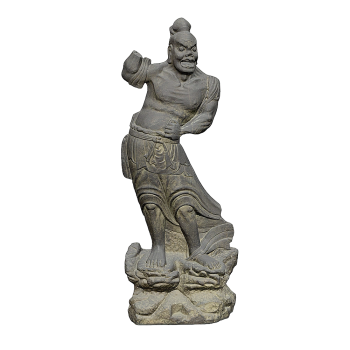
King Kong Rex

King Kong Rex

This sculpture is the Buddhist King Kong Hercules (also known as the two generals of hum and ha), which is the patron saint of Buddhist temples and usually appears in pairs to defend the entrance to the temple. Its image usually has strong muscles and an angry face, symbolizing the power of Buddhism to protect it from evil. This style is common in the stone carving art of the Chinese Northern Qi Dynasty (550-577 AD) or the Tang Dynasty (618-907 AD). Such limestone statues have also been unearthed at sites such as the Longmen Grottoes. In some museum collections (such as the Litberg Museum in Zurich), a statue of the Northern Qi King Kong with a similar missing arm can be seen.
Frog on the Rock statue

Frog on the Rock statue

The statue depicts a frog squatting on an irregularly shaped stone, presenting a realistic and age-eroded gray appearance, possibly with mossy green or yellow markings.
One of the stone reliefs of six horses in Zhaoling "Sa Lu Zi"
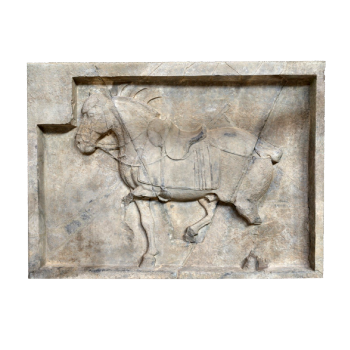
One of the stone reliefs of six horses in Zhaoling "Sa Lu Zi"

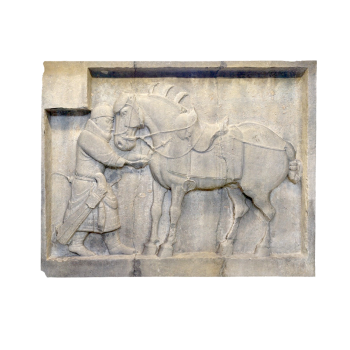
"Six Horses of Zhaoling" is a stone relief sculpture made by Emperor Taizong Li Shimin (reigned 626-649) to commemorate the six war horses he rode during the process of establishing the Tang Dynasty and unifying the whole country. This relief depicts the scene of Li Shimin's mount "Sa Lu Zi" (its name means "Qiu Lu" in Turkic language) after being injured by an arrow in battle, and the general Qiu Xinggong drew an arrow for it. In 1914, "Sa Lu Zi" and another war horse "Boxing Mao" were stolen and sold out of the country and are now in the Museum of Archaeology and Anthropology at the University of Pennsylvania.
Liujun Stone Carving Relief in Zhaoling

Liujun Stone Carving Relief in Zhaoling

This is one of the stone reliefs of "Six Horses of Zhaoling. The six horses in Zhaoling are stone reliefs carved by Emperor Taizong Li Shimin (reigned from 626 to 649) to commemorate the six war horses he rode during his war. The horse in the image is called "Punch Hair", which is named after its curly hair. In the battle with Liu Hei-yi, Li Shimin rode this horse. The "Zhaoling Liujun" was originally located on both sides of the northern altar of the Tang Taizong Zhaoling in Liquan County, Shaanxi Province. Among them, "Boxing Mao" and "Lu Sa Zi" were stolen and sold to the United States in 1914 and are now in the Museum of the University of Pennsylvania. The remaining four Jun are now in Xi'an Forest of Steles Museum
Minerva marble head sculpture

Minerva marble head sculpture

Minerva is an important goddess in Roman mythology. Minerva's functions were very broad, and she was one of the twelve Roman gods. She is the Greek goddess of wisdom Athena in Roman mythology in the corresponding god. Her main symbols include the owl representing wisdom, the olive branch representing victory, and the snake. In art, she is often depicted as wearing armor, a helmet, and holding a spear and shield.
Ancient Egyptian Baboon Stone Carvings

Ancient Egyptian Baboon Stone Carvings

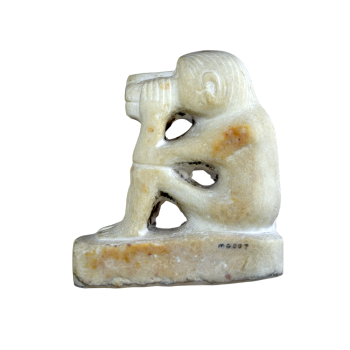
This is a small stone statue of a baboon in a typical ancient Egyptian-style squatting posture. In ancient Egyptian mythology, baboons were one of the incarnations of the god of wisdom, Thoth, and were often represented by this squatting posture with hands on knees and a solemn expression. It is worth noting that there is a clear manual ink book number "M6007" on the side of the base ". This shows that the model is generated by high-definition scanning based on real museum collections or archaeological unearthed cultural relics, and has extremely high scientific research and historical archive value.
Hunting goddess Diana riding deer stone carving

Hunting goddess Diana riding deer stone carving

This is a stone carving of Diana, the hunting goddess, riding a deer, showing a high dynamic beauty and classical artistic features. Diana (corresponding to Artemis in Greek mythology) rides naked on the back of a stag that is leaping into the air, holding the antlers in her right hand to maintain balance, and holding a long bow in her left hand, showing the dynamic moments of hunting. The front hoof of the stag is vacated, and the rear hoof is pedaled on the base decorated with tree roots. The whole stag is inclined upward, which has great visual impact.
Stone Seahorse (granite)

Stone Seahorse (granite)

This is a granite stone carving seahorse. In traditional Chinese architecture (especially ancient houses or gardens in southern Fujian and Lingnan regions), this stone carving is usually used as a decorative component of the building, a garden sketch or a kissing beast on the roof. Combines horse head, fish body (with fins) and curly tail. This kind of "seahorse" image is often regarded as an auspicious mythical beast capable of opening fire and water in traditional oriental culture, and often appears in ancient buildings near water systems or coastal areas. The lines are simple and powerful, especially the spiral treatment of the tail and the fins on the back, which show the exquisite round carving craftsmanship of the stonemason.
Contemplative ape statue

Contemplative ape statue

A "contemplative ape" statue carved in dark stone, this work presents a high degree of realism and artistic expression. The ape sits curled up, with one hand on his cheek and deep eyes, showing a state of contemplation similar to that of a human "thinker.
Chinese-style Stone Statues of Buddha

Chinese-style Stone Statues of Buddha

This is a Chinese-style stone Buddha statue, with a very typical Oriental Buddhist statue art features. The Buddha statue stands on the lotus seat, wearing a shoulder-style or right-shoulder-style cassock, with its lines drooping naturally, showing the unique calm feeling of stone carving art. The Buddha's hands are marked with a specific handprint (possibly a variant of the fearless or willing seal), symbolizing compassion and protection. The snail hair bun is clearly visible, the face is plump and round, and the expression is serene, showing the "quiet beauty" pursued by the oriental statue ".
Stone carving of Buddha's head (Thai dra mantle period)

Stone carving of Buddha's head (Thai dra mantle period)

This is an ancient stone Buddha head with a unique artistic style, and is usually identified as a work originating from the Dhara Mantdi (Mon-Dvaravati) period in Thailand, about the 7th to 8th centuries AD. It combines Indian archetypes and local aesthetics, and is an important representative of early Thai Buddhist art. The Buddha's head shows a serene, introspective look. The piece is carved from sand or limestone. As an ancient relic, it bears obvious traces of years and beautiful patina (patina), reflecting its long history.
A bust of the Roman emperor Marco Areliu
A bust of the Roman emperor Marco Areliu

This bust depicts the last emperor of the five sages of the ancient Roman Empire, the famous "philosopher emperor"-Marco Aurelius, who reigned from 161 to 180 AD and was one of the most respected emperors in Roman history. The statue displays his signature thick curly hair and curly beard, a fashion style pioneered by Emperor Hadrian and inherited by subsequent Emperors of the Antunen dynasty, designed to mimic the image of the Greek philosopher. He was a Stoic philosopher whose Meditations are still an important philosophical document.
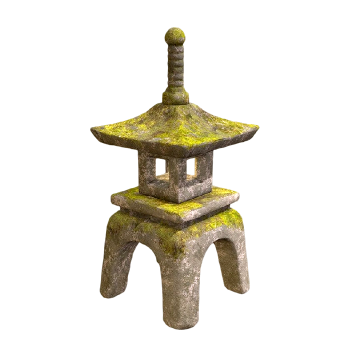
Japanese-style stone lanterns

Japanese-style stone lanterns

A Japanese-style stone lantern, often used as a garden ornament. It has a Pagoda-style design inspired by ancient Asian Buddhist architecture. This type of lantern is very common in Japanese gardens and usually consists of multiple stacked parts, including a base, a light room, a roof and a jewel-shaped decoration on the top. In Japan, stone lanterns (Tōrō) were originally used to illuminate temples and shrines, and were later introduced into private gardens by tea ceremony masters to create a peaceful, Zen atmosphere.
Stone carving brave (HD 3D scanning)

Stone carving brave (HD 3D scanning)

A combination of animal features, often described as having a dragon head, a horse body, unicorn feet, and sometimes wings. The neck and body have carved details of curly or flowing mane and hair. With a big mouth and a strong expression, this gesture symbolizes fortune, evil spirits and deterrence in traditional Chinese mythical beast sculptures.
Nepal Cultural Heritage Garuda Stone Carvings

Nepal Cultural Heritage Garuda Stone Carvings

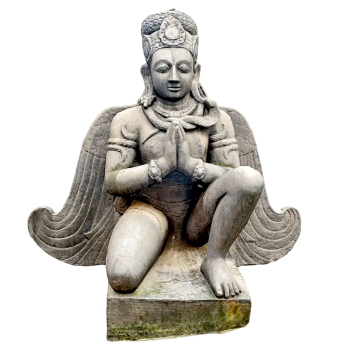
Garuda is a bird (usually an eagle) in Hindu mythology, a mount (vahana) of the god Vishnu. Garuda unfolded in two forms. One is an animal form (such as a huge bird with half-spread wings), and the other is an anthropomorphic form (such as a human form with wings and some bird features).
Japanese cultural heritage monks sitting on elephants

Japanese cultural heritage monks sitting on elephants

Hindu Heritage Garuda Stone Carvings

Hindu Heritage Garuda Stone Carvings

Garuda is a bird (usually an eagle) in Hindu mythology, a mount (vahana) of the god Vishnu. Garuda unfolded in two forms. One is an animal form (such as a huge bird with half-spread wings), and the other is an anthropomorphic form (such as a human form with wings and some bird features).
Crane relief in the forest

Crane relief in the forest

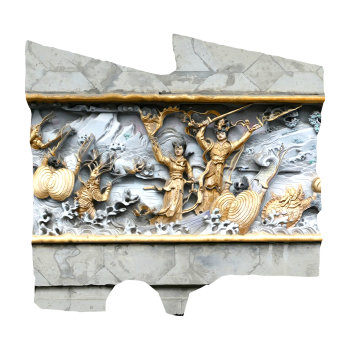
Hangzhou Ancient Temple Relief Mural

Hangzhou Ancient Temple Relief Mural

South China Sea Guanyin Stone Carvings

South China Sea Guanyin Stone Carvings

Stone Bergamot
Stone Bergamot

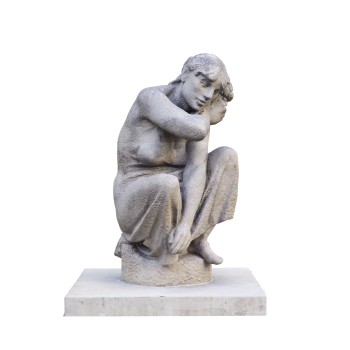
EarthSong statue-Miloš Axman

EarthSong statue-Miloš Axman

Created in 1986 by Czech artist Miloš Axman, this sculpture uses sandstone as the material. Located in the Kohoutovice district of Brno, Czech Republic, this sculpture is not only one of the masterpieces of his artistic career, but also an important cultural landmark of the region. Known for his outstanding contributions to the art of sculpture, his work covers a wide range of areas from small interior works to large monumental sculptures. With its unique artistic style and profound cultural connotation, it has become an indispensable part of Brno's urban landscape.
Stone Statues of Marta

Stone Statues of Marta

It is a statue in Brno, Czech Republic, known for its early Classical style and residual Rococo elements. Dating back to 1789, it is an important cultural symbol and historical witness. Appreciated for its artistic value, it is also valued for its environmental shaping role in the city park, which is located in front of the Mitrovsky summer house. It not only provides an aesthetic enjoyment for the citizens and tourists of Brno, but also gives people a glimpse of the artistic style and cultural atmosphere of that era. As a historical relic, it bears witness to the rich historical and cultural heritage of Brno and the entire Czech region.
1 2 3 4 5 Next